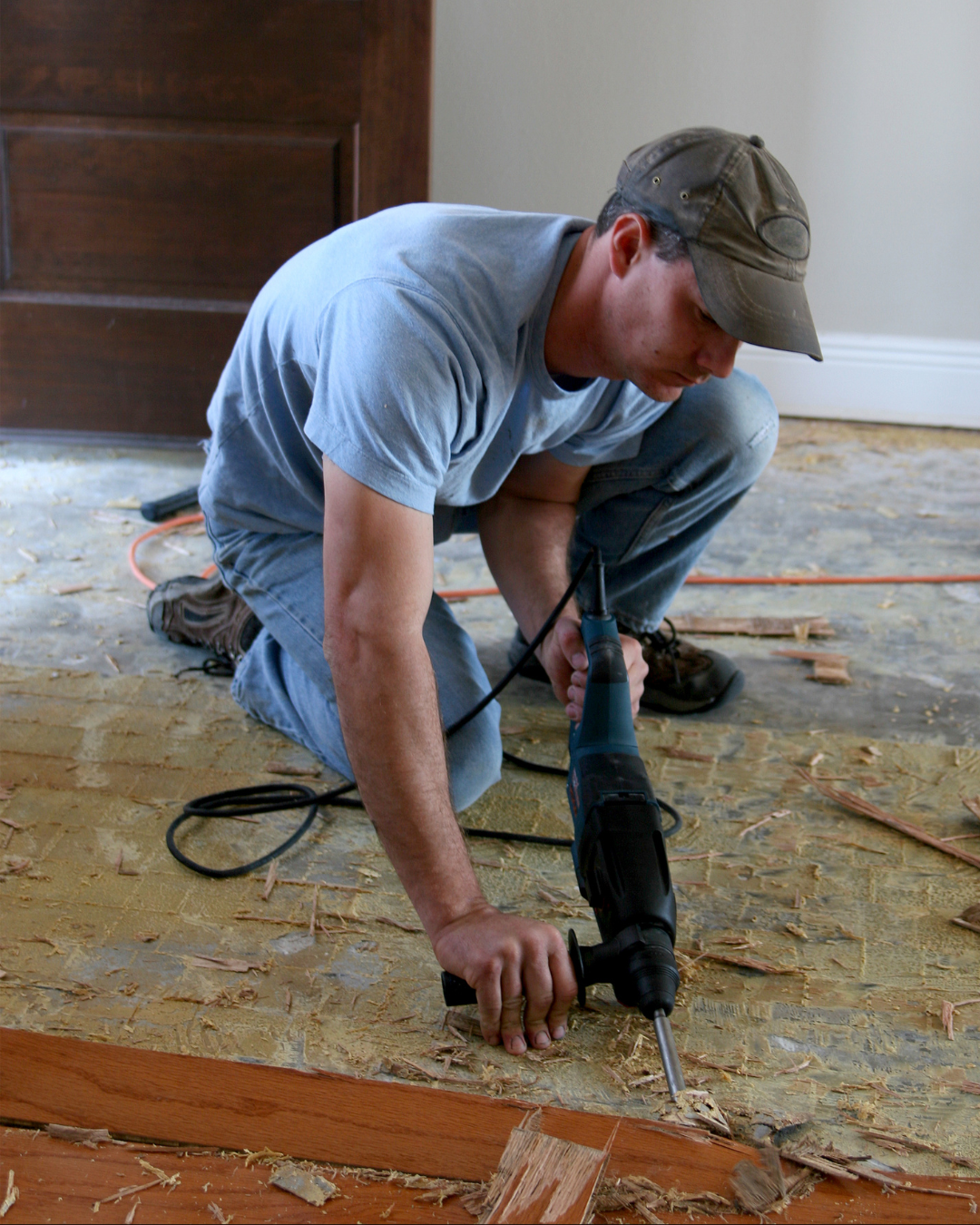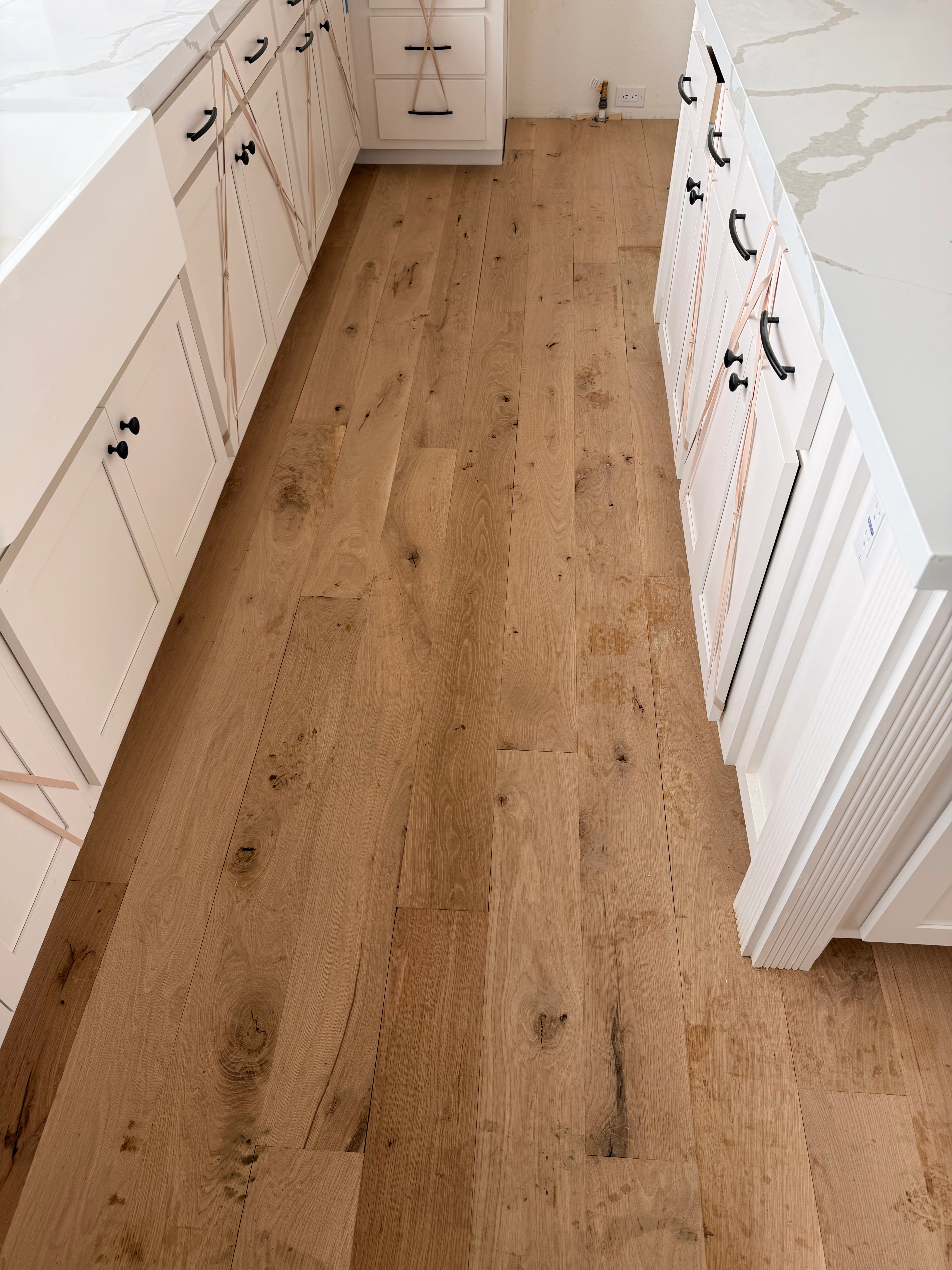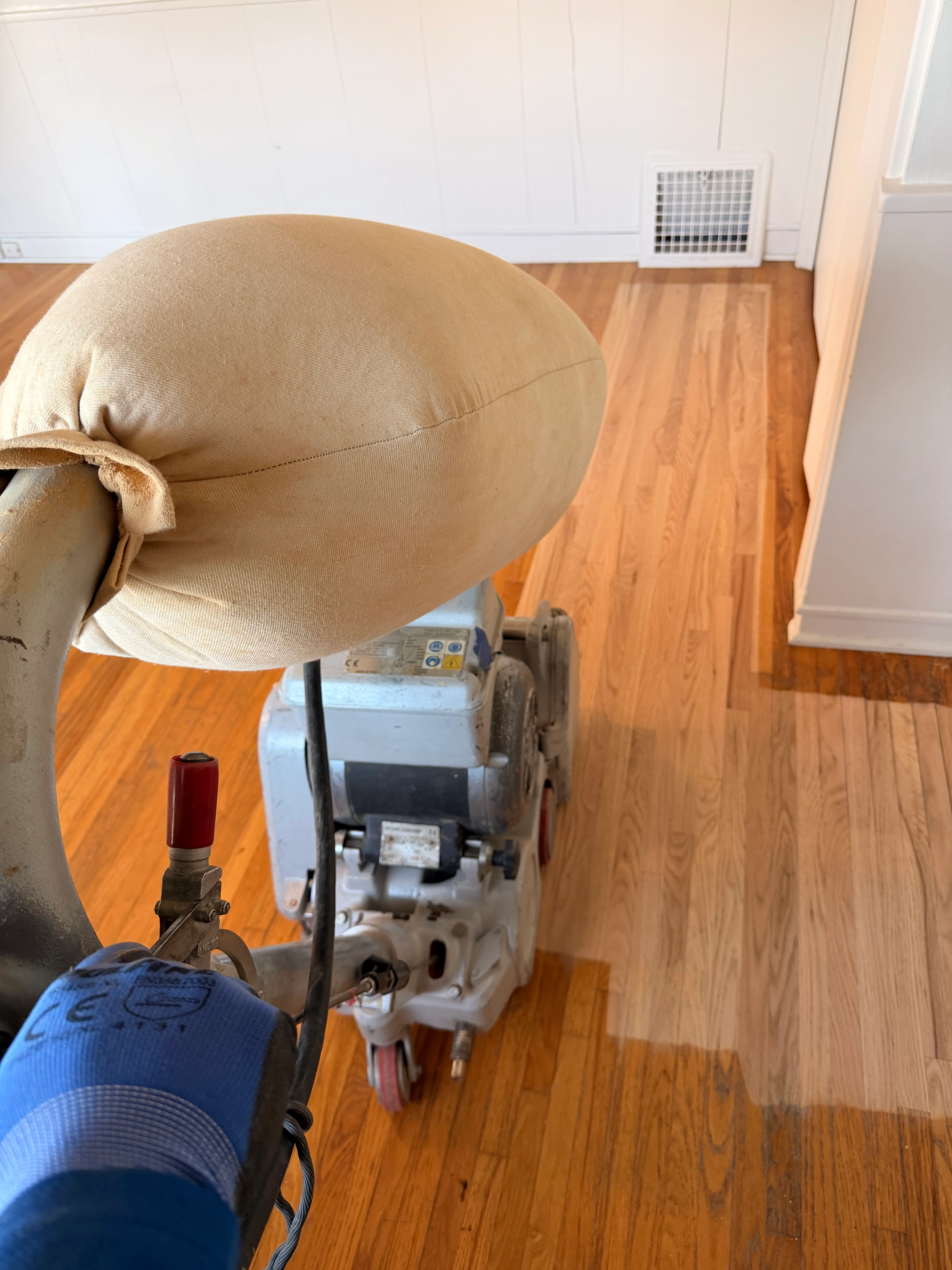
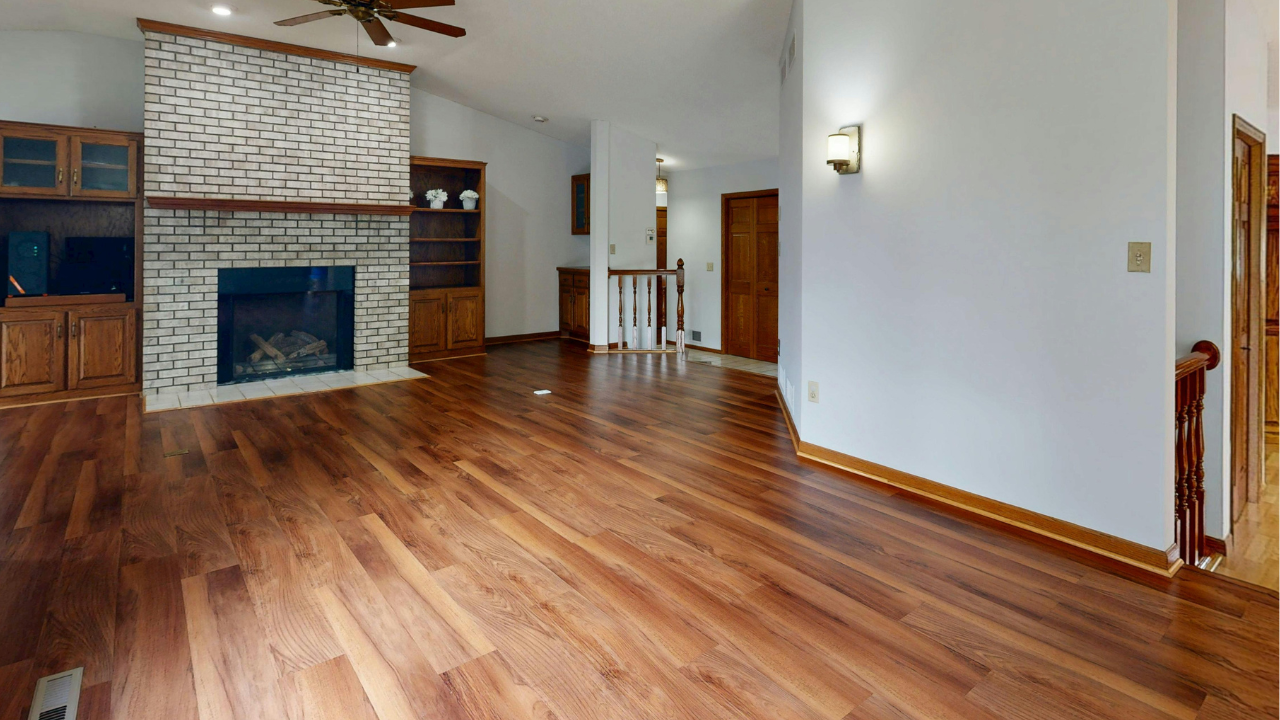
Laminate and luxury vinyl plank are the two floors people most often confuse. Both are click-together planks, both are printed to look like wood, and from six feet away you would struggle to tell them apart. In a showroom they get treated as interchangeable.
They are not. What each one is made of decides how it handles water, scratches, and Florida humidity, and that decides which rooms it belongs in.
What each one is made of
Laminate has a core of high-density fiberboard, which is compressed wood fiber. On top of that sits a printed design layer and a hard, clear melamine wear layer. The core is what gives laminate its rigid, solid feel.
LVP has a core made of vinyl, either a stone-plastic composite or a more flexible vinyl blend. On top is a printed layer and a vinyl wear layer. Because nothing in the plank is made of wood, the plank itself does not absorb water.
Almost every practical difference between the two comes from that one fact.
Water: the deciding question in Florida
LVP has a waterproof core. A leaking dishwasher, a wet dog, or a toddler emptying a cup of juice will not damage the plank itself. That is why we put LVP in bathrooms, laundry rooms, and kitchens far more often than laminate.
Modern laminate has come a long way. The water-resistant lines we install, such as AquaGuard and Pergo Extreme, have sealed edges and treated cores that handle a spill or a pet accident that gets wiped up. What they cannot handle is standing water or a slow leak under an appliance. Once fiberboard swells, it stays swollen, and the only fix is replacing the boards.
So the honest rule is simple. If water regularly ends up on the floor in a room, choose LVP. If it rarely does, laminate is fully up to the job.
Scratches, dogs, and sand
This is where laminate pulls ahead. Its melamine top layer is very hard and is rated on the AC scale for abrasion. AC4 and AC5 lines, which is what we install, are built for heavy household traffic. Dog claws, kids' toys, and the fine sand that comes home from a day at the Gulf all wear on it slowly.
LVP resists scratches well, and a thicker wear layer helps a lot. But vinyl is softer than melamine, so sharp grit underfoot and heavy furniture dragged across it can leave marks. Felt pads and a doormat at every exterior door make a real difference with either floor.
How each one feels and sounds
Laminate feels firmer and more like real hardwood underfoot, and the better lines have embossed grain that lines up with the printed pattern, so the texture matches what you see. It can sound hollow on its own, which is why a good underlayment matters. We install it over dimpled underlayment so it walks quiet.
LVP feels a little softer and a little warmer, and it tends to be quieter without extra help. Some people prefer it for that reason, especially in bedrooms and upstairs rooms.
Humidity and Florida houses
Both floors are floating floors, so they move slightly with temperature and humidity. Both need an expansion gap at the walls, hidden under the baseboard or quarter round. Skip that gap and the floor can buckle on a hot, humid summer day.
Laminate is more sensitive to moisture coming up from below, so on a concrete slab, which is most Tampa Bay homes, the moisture barrier under it is not optional. We moisture-test slabs before quoting either floor. If you want the wider picture of how different materials cope with the climate here, our guide to the best flooring for Florida humidity covers it.
Cost
The two overlap a lot. Entry-level laminate and entry-level LVP land in a similar range, and both climb with thicker cores, better wear layers, and more realistic visuals. Installation is similar too, since both click together over a prepared subfloor. The real cost difference on most jobs is subfloor prep, which is the same for either floor.
We quote both side by side on the same visit so you are comparing actual installed prices for your rooms, not price-per-box at a store.
A practical split for most homes
- Bathrooms and laundry rooms: LVP. Water is a daily event.
- Kitchens: usually LVP, especially around the sink and dishwasher.
- Living rooms, bedrooms, and hallways: either one. Laminate if scratch resistance and a firmer, wood-like feel matter most. LVP if you want one floor running through the whole house without a change at the kitchen.
- Homes with large dogs: laminate in dry rooms holds up very well to claws. See our guide to pet-friendly flooring for more.
See them side by side
The best way to choose is to hold both in your hand, in your own light. We bring samples of each to every free in-home visit. You can also read more about our laminate flooring installation and luxury vinyl plank installation, or request your free estimate.