Hardwood floors get dull, scratched, and stained. After enough years, a lot of homeowners assume the only fix is to tear them out and start over. Often it is not.
One of the best things about real wood is that the surface can be renewed. Before you price out new flooring, it is worth knowing which of three fixes your floor actually needs.
Option 1: A recoat
If the floor looks dull and has fine surface scuffs but the wood underneath is fine, a recoat is often all it needs. The existing finish is lightly abraded so a new coat will bond, then a fresh layer of finish goes on top.
A recoat brings back the sheen and adds a new protective layer. It is fast, it costs far less than a full refinish, and it does not remove any wood. The catch is that it only fixes damage that sits in the finish. Scratches that have cut into the wood, gray patches where the finish has worn through, and stains will still be there.
Done every few years in high-traffic areas, a recoat is also the cheapest way to make a floor last. It keeps wear in the finish, where it belongs, rather than in the wood.
Option 2: A full sand and refinish
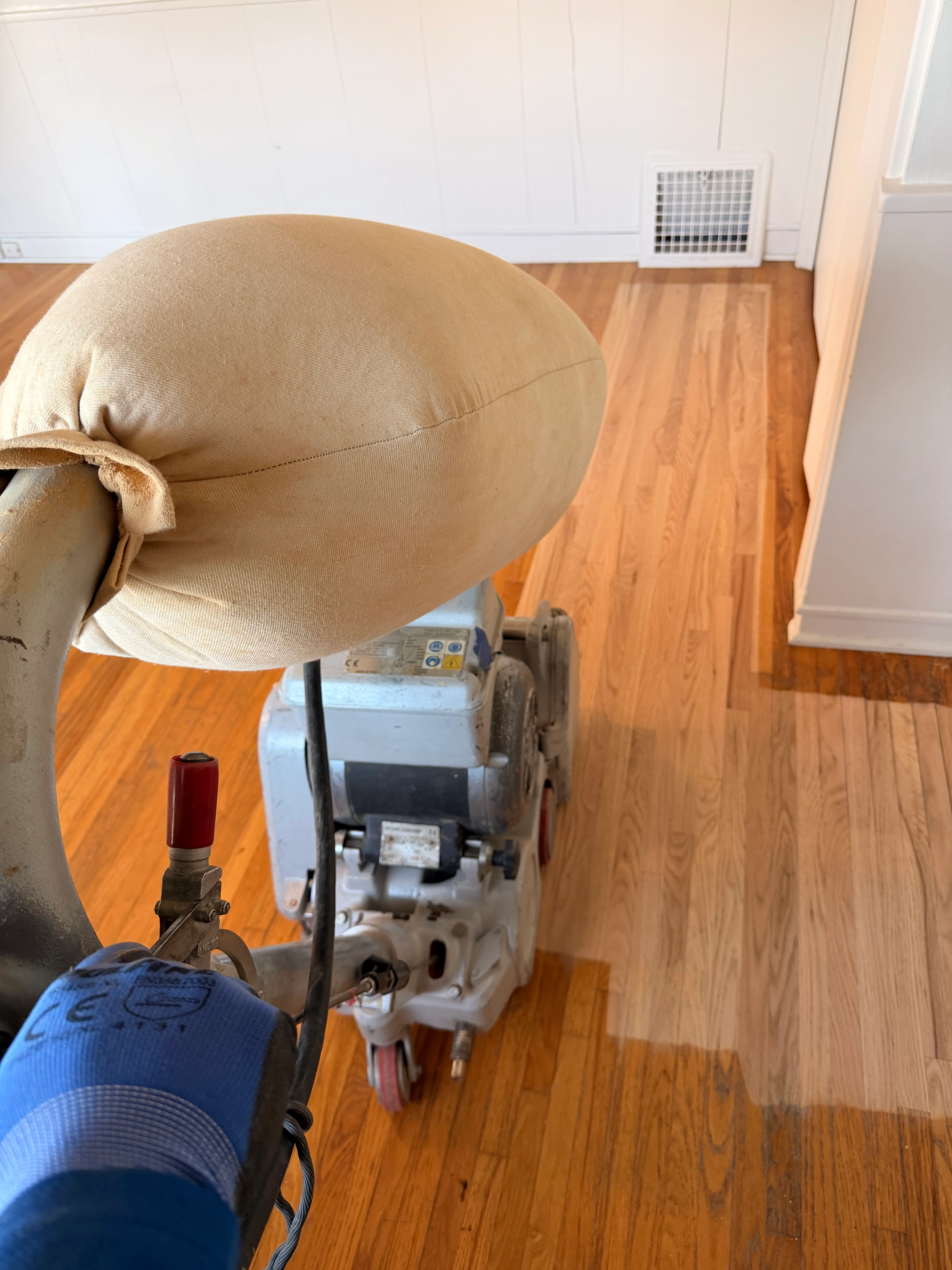
When scratches go into the wood, the finish has worn through in traffic lanes, or you want a different color, the floor needs a full refinish. The old finish and a thin layer of wood are sanded away, the floor is stained if you want a new color, and new coats of finish are applied.
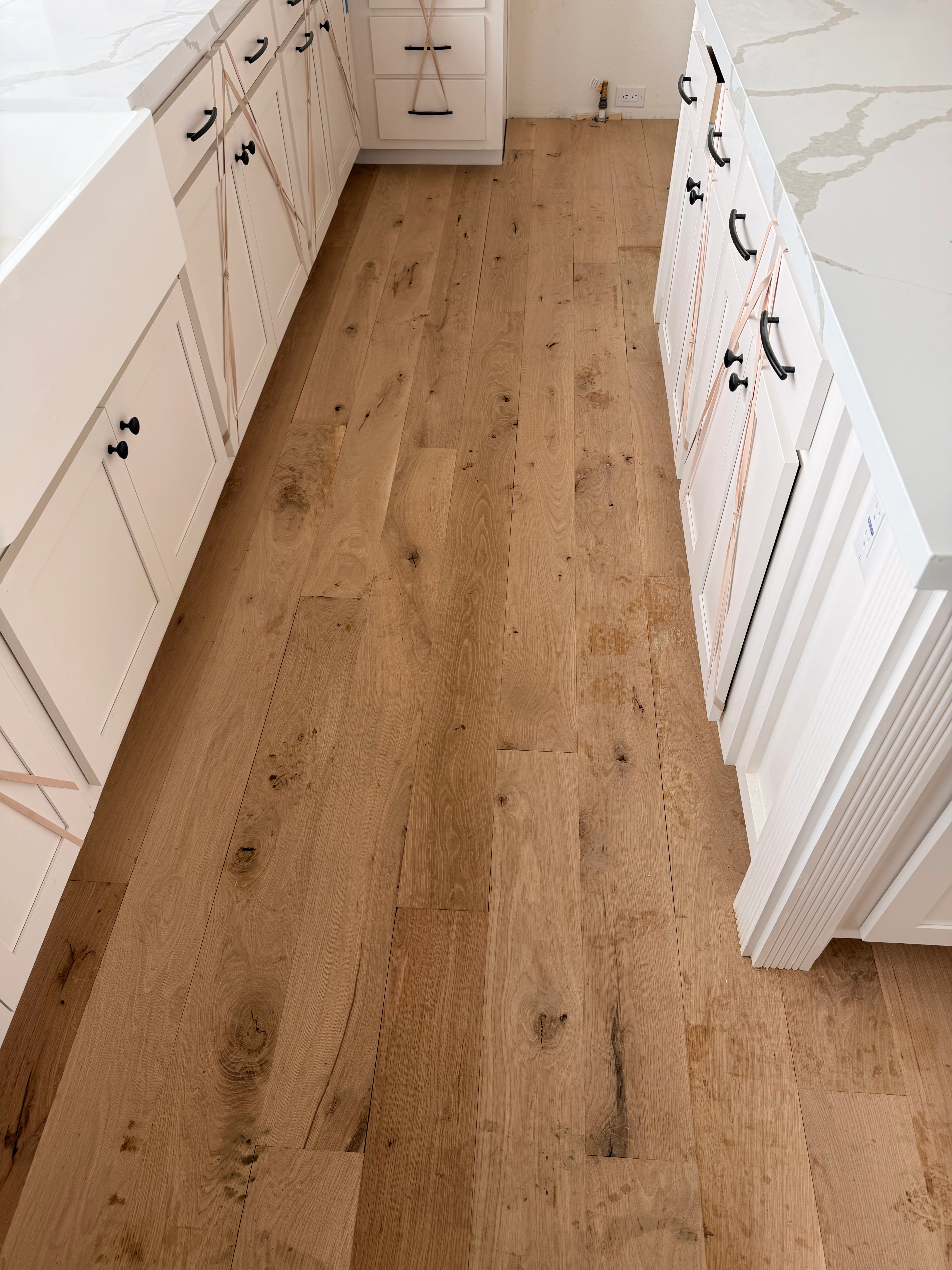
A full refinish takes out most scratches, scuffs, and sun fading. It also lets you change the look entirely. Many homes around Tampa Bay have orange-toned oak from decades ago, and a refinish in a modern natural or light gray-brown tone can make the whole house feel newer.
A few things to know about color:
- Oak takes stain well. Red and white oak are the easiest woods to change the color of.
- Maple and some exotics do not. They can look blotchy under dark stain, so we usually suggest a natural or clear finish on those species.
- Always test first. We lay stain samples directly on your sanded floor, in your light, before committing to a color.
We also talk through the finish itself. Water-based finishes dry faster, have less odor, and stay clear over time. Oil-based finishes warm up to an amber tone as they age. Both are durable; it is mostly a question of the look you want.
Option 3: Repair and refinish
Some damage cannot be sanded out. Dark or black stains from pet accidents or a long-term leak mean moisture went deep into the board. Sanding will lighten it a little, but it will not remove it.
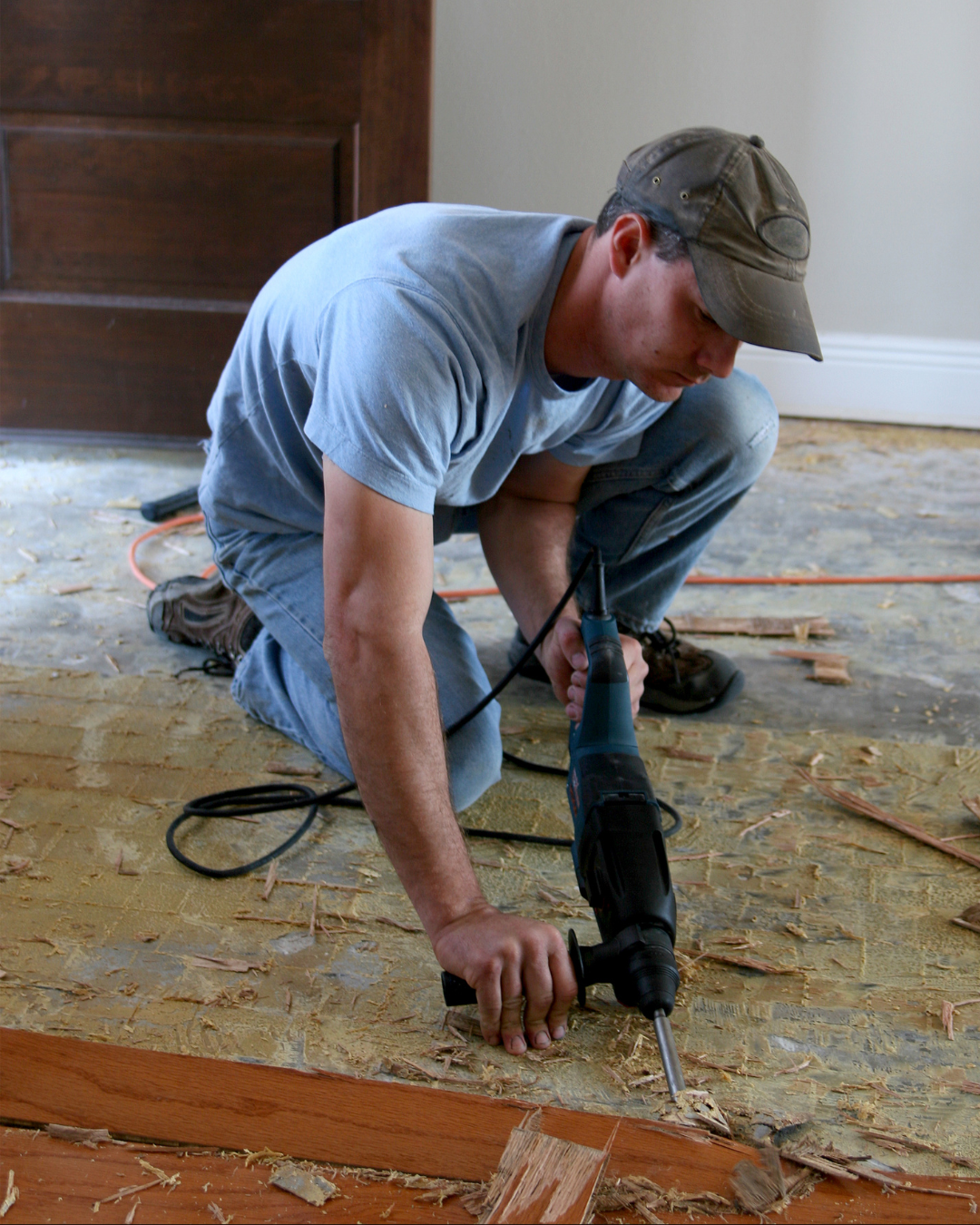
The fix is to cut out the damaged boards and weave in matching boards, then refinish the whole room so the repair disappears. The same approach works for a small area of termite damage, a cracked board, or a spot where something heavy was dropped.
Before any repair, we find out why the damage happened. A stain near a refrigerator or dishwasher, or near an exterior door, can mean an active leak. Replacing boards without fixing the source just means doing it again.
When replacement is the right call
There are times when refinishing is not worth it, or not possible:
- Engineered floors with a thin wear layer. If the layer of real wood on top is too thin, sanding will cut through it. These floors can be recoated but not refinished.
- Floors that have already been sanded many times. Solid hardwood has a limit. If the tongues or nail heads are starting to show, there is not enough wood left to sand again.
- Widespread water damage. Cupping or buckling across a whole room usually points to a moisture problem from below. Once that is solved, boards that have permanently deformed often need replacing.
- You want a different floor altogether. If the goal is a waterproof floor for a busy family or a big dog, there may be a better fit than wood. Our pet-friendly flooring guide walks through the options.
Living through a refinish
Refinishing is less disruptive than most people expect. We use a near-dustless sanding system that captures most of the dust at the sander, so it does not end up coating the house. The rooms being worked on are off-limits until the finish dries, and we plan the sequence so you can still get in and out of the house.
A recoat is usually done in a day. A full refinish takes several days, depending on square footage, whether you are staining, and how many coats are needed. You can walk on the floor in socks fairly soon, but furniture should wait until the finish has cured, and rugs should wait longer still. We give you exact timing for your floor and your finish.
Florida-specific advice
Humidity is the biggest enemy of a wood floor here. Keep the air conditioning running, even when you are away for the summer, so indoor humidity stays steady. Wood that swings between damp and dry moves, and movement is what opens gaps and causes cupping. Our guide to hardwood flooring in Tampa Bay goes into more detail.
Sand is the other one. Fine grit tracked in from the beach or the yard wears through finish quickly. A good mat at every exterior door and regular sweeping will add years between refinishes.
Not sure what your floor needs?
We look at every floor in person, check the wear layer on engineered floors, and tell you honestly whether it needs a recoat, a refinish, a repair, or replacement. Learn more about our hardwood flooring services, or request your free in-home estimate.