The kitchen is the hardest-working floor in most homes. It takes spills, dropped dishes, a leaking dishwasher now and then, and more foot traffic than any other room. It is also where people stand for long stretches, so comfort matters more than it does almost anywhere else.
Here is how each of the floors we install handles a kitchen, and the install details that make the difference.
What a kitchen floor has to handle
- Water. Splashes at the sink, drips from the fridge, and the occasional appliance leak.
- Impact. A dropped cast iron pan or a heavy jar.
- Comfort. Hours standing at the counter or stove.
- Cleaning. Grease, crumbs, and sticky spills, often daily.
- Flow. In open-plan Florida homes, the kitchen floor is usually the living room floor too.
Luxury vinyl plank: the best all-rounder
LVP is what we install in more kitchens than anything else. The core is waterproof, so a leak under the sink or a tipped-over water bowl does not damage the plank. It is softer and warmer underfoot than tile, which is easier on the legs, and dropped glasses are less likely to shatter on it.
It also runs cleanly from the kitchen into the living and dining areas with no transition, which is a big part of why it suits open-plan homes so well. The trade-off is that a heavy, sharp impact can dent it, and a very heavy appliance dragged across it can mark it. A thicker wear layer helps. See our luxury vinyl plank installation page for the lines we carry.
Porcelain tile: the most durable
Porcelain is about as tough as a kitchen floor gets. Water, heat, and stains do not bother it, and with sealed grout it is very easy to keep clean. Wood-look porcelain planks give you the warmth of wood with the durability of tile.
The downsides are comfort and breakage. Tile is hard to stand on for long periods, and a dropped glass will not survive. A heavy pan dropped corner-first can chip a tile, so it is worth keeping a few spare tiles from your install. A good anti-fatigue mat at the sink solves most of the comfort issue. Our grout guide covers the grout choices that hold up best to kitchen cleaning.
Laminate: tough, with one caution
Laminate's hard top layer is excellent against scratches and scuffs, and the water-resistant lines we install handle everyday spills that get wiped up. Where it is vulnerable is a slow leak, such as a dishwasher supply line or a fridge water line dripping behind the appliance for weeks. That kind of standing water can swell the core. In kitchens we usually recommend LVP unless scratch resistance is the top priority. We compare the two in our laminate vs. LVP guide.
Hardwood: beautiful, with care
Wood in a kitchen is a look many people love, and in an open-plan home where the rest of the house is wood, it ties everything together. Engineered hardwood is the more stable choice for Florida. It will need spills wiped up promptly and a mat at the sink, and it will show wear in front of the stove and sink over time. The good news is that worn areas can be renewed. Our post on refinishing vs. replacing hardwood explains how.
Sheet vinyl: the practical budget choice
In a smaller or galley kitchen, sheet vinyl can often go down in one piece with no seams at all, which makes it very good at keeping water on top of the floor. It is affordable, comfortable, and easy to clean, and it is a popular choice for rental properties. It does not look as much like real wood as LVP. Our sheet vinyl guide covers where it fits best.
Install details that matter in a kitchen
Cabinets and islands
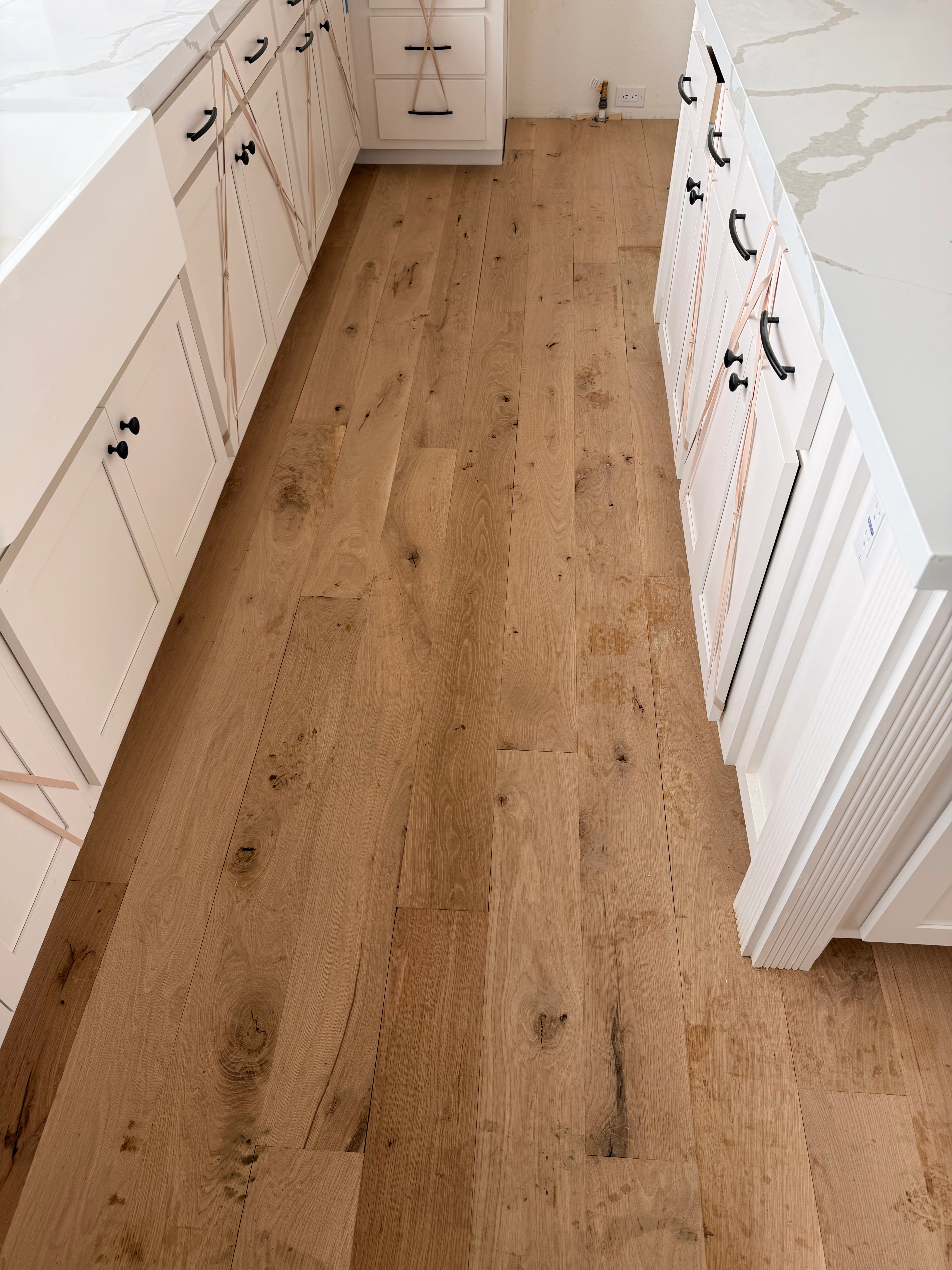
If you are remodeling the kitchen, decide early whether the floor goes in before or after the cabinets. Tile can go under new cabinets. Floating floors like LVP and laminate should not be trapped under cabinets or a heavy island, because they need room to move with temperature and humidity. They are installed up to the cabinet bases, with the edge hidden under the toe kick trim.
Appliances
A new floor that is thicker than the old one can trap the dishwasher under the countertop, making it hard to pull out for service later. We measure appliance clearances before we start and plan the floor height around them. We also move and reset the fridge and range so the floor runs fully underneath.
The subfloor
Most kitchens in Tampa Bay sit on a concrete slab. We check it for flatness and moisture before quoting, because a high spot or a damp slab will show up in any floor eventually. If there is old tile, our guide to putting new flooring over existing tile explains when that works and when it should come up.
What we suggest for most kitchens
- Busy family, open floor plan: LVP throughout.
- Maximum durability, or a home already full of tile: porcelain tile, with a mat at the sink.
- Wood throughout the rest of the house: engineered hardwood, carried through.
- Rental or tight budget: sheet vinyl or entry-level LVP.
If the kitchen is getting a refresh above the floor too, our backsplash installation guide is worth a read.
See the options in your kitchen
We bring samples of every floor to your home, so you can see them next to your cabinets and counters in your own light. Learn more about our tile flooring and LVP services, or request your free estimate.