A lot of homes around Tampa Bay have tile floors that are structurally fine but look dated. The question we hear all the time is whether new flooring can go straight over the top.
The short answer is: often, yes, if the tile passes a few checks. Here is what we look at, and when the old tile really should come out.
Why people want to keep the tile
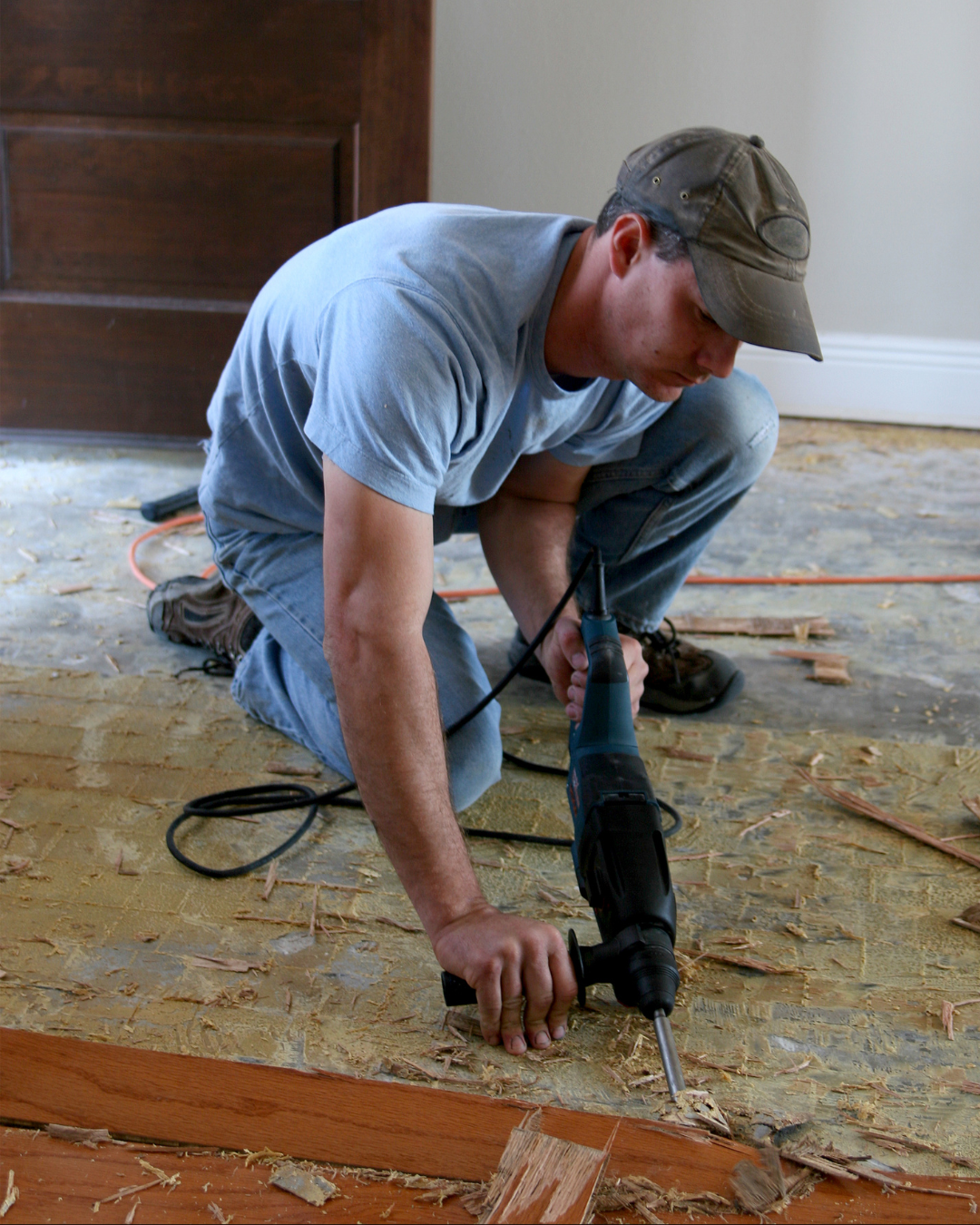
Removing tile from a concrete slab is one of the most disruptive parts of a flooring job. It means breaking up every tile and grinding off the old thinset. It is loud, it creates a lot of dust even with good containment, and it adds labor and disposal cost. If the tile can stay, the project is faster, cleaner, and cheaper.
What can go over tile
- Luxury vinyl plank. The most common choice. Rigid-core LVP floats over tile well, as long as the surface is prepared. See our LVP installation page.
- Laminate. Also works, with the right underlayment. Our laminate installation page covers the lines we use.
- Floating engineered hardwood. Possible in some cases. Nail-down hardwood is not, since there is nothing to nail into.
- Sheet vinyl and glue-down vinyl. Only with a full skim coat, because thin, flexible floors show every grout line underneath.
- New tile. Possible, but rarely the best idea. More on that below.
The four checks we make first
1. Is every tile solidly bonded?
We tap across the floor listening for hollow-sounding tiles and look for loose or cracked ones. A few loose tiles can be reset or removed and the gap filled. Widespread hollow spots or long cracks running across several tiles usually point to a problem underneath, and covering it up just hides it under a new floor. Our article on why tile cracks explains the causes.
2. Is it flat enough?
Every manufacturer publishes a flatness tolerance for its floor, which limits how much the surface can dip or rise over a set distance. Old tile often has lippage, where one tile edge sits higher than its neighbor, or a slab that was never flat to begin with. We check with a straightedge and, where needed, grind down high edges and fill low spots so the new floor lies flat.
3. How deep are the grout lines?
Wide or deep grout lines can show through a new floor as faint lines, and over time they can stress the locking joints on click-together planks. The fix is to fill the grout lines with a cement-based patching compound so the surface is smooth. With thinner floors like sheet vinyl, we skim coat the entire floor.
4. Where does the extra height go?
Leaving tile in place raises the floor by the thickness of the new flooring. That matters at:
- Doors. Interior doors can usually be trimmed and jambs undercut. Exterior doors and sliders need a closer look.
- Appliances. A dishwasher can end up trapped under the counter. We measure clearances before we start.
- Transitions. Where the new floor meets carpet, another floor, or a step, the height difference has to be bridged neatly and safely.
- Toe kicks and baseboards. A raised floor can make the cabinet toe kick look short. Baseboards usually come off and go back on, or are replaced.
When the tile should come out
- Many tiles are loose, hollow, or cracked.
- The floor is badly out of flat and would need extensive grinding and leveling anyway.
- The added height would cause real problems at exterior doors, appliances, or stairs.
- There is a moisture problem under the tile that needs to be dealt with.
- You are installing new tile, nail-down hardwood, or another floor that should be bonded directly to the slab.
A note on older homes: if you have very old vinyl flooring or black adhesive under the tile, some older flooring products and adhesives contained asbestos. Those materials should be tested before anyone disturbs them. Leaving them covered and undisturbed is sometimes the safest option.
Why we rarely tile over tile
Setting new tile over old tile is possible with the right preparation, but it adds a lot of height and weight, and the new tile is only as sound as the old installation beneath it. If the old tile ever loosens, it takes the new tile with it. When a homeowner wants new tile, we nearly always recommend removing the old tile and starting from a properly prepared slab. In showers, we never tile over existing tile. We explain why in what separates a good shower tile job from a leak.
What this means for your kitchen or living area
For most homeowners who want to replace dated tile with a warmer wood-look floor, LVP over well-bonded tile is a fast, clean, cost-effective route. If you are deciding what to put in a kitchen specifically, our guide to the best kitchen flooring for a Florida home covers it.
Find out if your tile can stay
On our free in-home visit, we check the tile, measure the flatness and the clearances, and tell you plainly whether it can stay or should come up, with both options priced if it is close. Request your free estimate to get started.